
Many technical structures employ some form of steel construction. Whether it's a container ship, rail vehicle, bridge or wind turbine tower, these structures can have hundreds of meters of welds. Therefore, if traditional industrial processes such as metal active gas welding or submerged arc welding are used, problems arise: due to the low arc strength, most of the energy consumed is not really used in the welding process, but as heat form loss to components. The energy required for post-weld processing is usually similar to the energy required for the welding process itself. "These energy-intensive processes cause severe thermal damage to the material and lead to severe deformation of the structure, followed by very expensive straightening work.
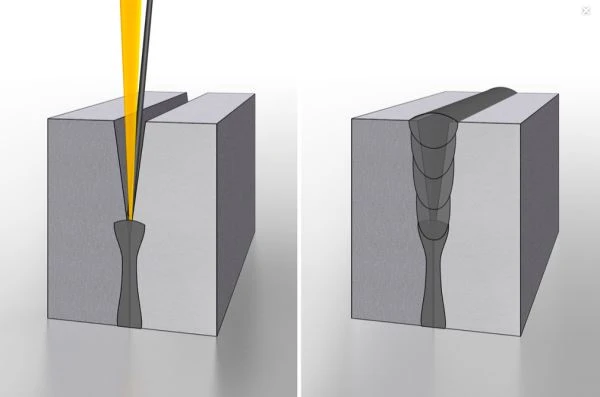
“Depending on the component, we can reduce the energy input to the component during welding by up to 80 percent, and we can reduce filler material consumption by up to 85 percent compared to conventional arc processes,”;"Furthermore, there is no need for a straightening process on the studied components. We can therefore reduce production time and costs, process high-strength steels and significantly improve the CO2 balance of the entire production chain. Given the large number of steel structures being built in Germany and around the world, This could prove to be very advantageous." This is because the high intensity of the laser beam ensures that the energy input is highly concentrated at the weld point, while the surrounding area of the component remains relatively cool. "Welding time has also been reduced by 50 to 70 percent;
The new process is also excellent in terms of seam quality – the seam is noticeably thinner and the edges are almost parallel, whereas in the conventional welding process the seam is V-shaped. "If laser welding is used in the steel structure process, it will become a unique selling point for German medium-sized companies and consolidate its market position in international competition ;
For a one-meter weld, the cost of a sheet with a thickness of 30 mm can be reduced by 50% compared to submerged arc welding, including the subsequent straightening process. For sheet thicknesses less than 20 mm, the metal active gas welding process is also commonly used, with potential cost savings even higher, up to 80%. For large companies, welding filler material alone can save over €100,000 per year in costs. In addition, the laser beam source used offers great potential to prevent rising energy costs due to its high efficiency (about 50%) and good process efficiency (80% reduction in energy input). With this evidence of practical applicability, the method can now be extended to other applications.
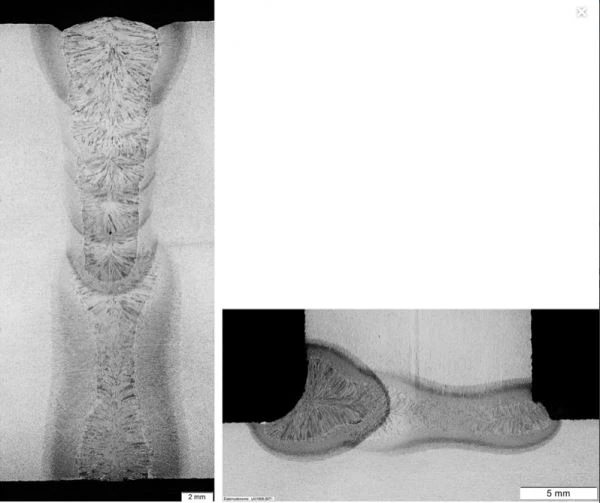
While the filler metal is being added, the laser is positioned at the junction between the edges of the two sheets to be welded. The energy of the laser beam melts the edges of the workpiece as well as the filler metal on the wire, then fills the gap between the two pieces and creates a high-quality weld. This process can be used for typical joint configurations in welded steel structures. The sheet edges are plasma cut and the joints sometimes have gaps up to 2mm wide, which the laser welding process can reliably bridge. When welding webs (T-joints) or butt joints, this process ensures that the joint is complete, i.e. the two parts are connected over the entire contact area. In conventional steel construction, there are technical limitations, especially when using T-joints.


