
Laser welding on aluminum alloys
Aluminum alloys have the advantages of low density, high strength and good corrosion resistance, so they are widely used in the automotive industry, new energy, aerospace and construction industries. At present, laser welding has been widely used in the production of aluminum alloy products. Compared with traditional welding methods, laser welding can provide higher production efficiency, better weld quality, and achieve high-precision welding and automation of complex structures.
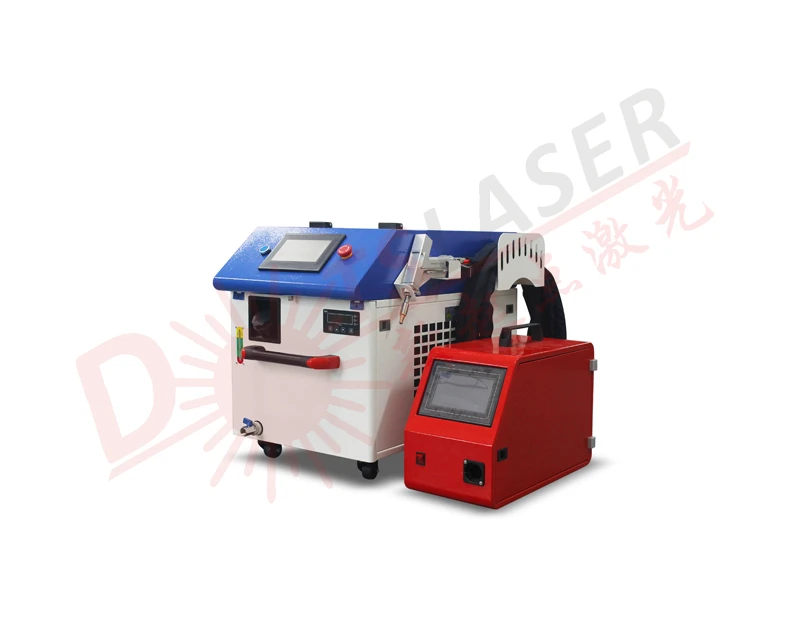
Laser welding is a technology in which a high-intensity laser is radiated to the metal surface, and the metal is melted and then cooled and crystallized to form a weld through the thermal coupling between the laser and the metal. According to the thermal action mechanism of laser welding, it can be divided into two types: thermal conduction welding and deep penetration welding. Thermal conduction welding is mainly used for packaging welding or micro-nano welding of precision parts; laser deep penetration welding is mainly used for welding materials that require complete penetration. Among them, the welding process will vaporize the material, and the keyhole phenomenon will appear in the molten pool. It is the most widely used laser welding method at present, and it is also the preferred method for aluminum alloy welding. Auxiliary materials, simple welding equipment, no consumables, easy to automate. 02 Disadvantages: The requirements for the welding film are high, so the weld is easy to sink; the starting point and end point of the welding are easy to produce key points; the stability of the welding process is general, and welding defects are easy to occur. 03Case: Building decoration industry - 5 series aluminum alloy door frame welding .
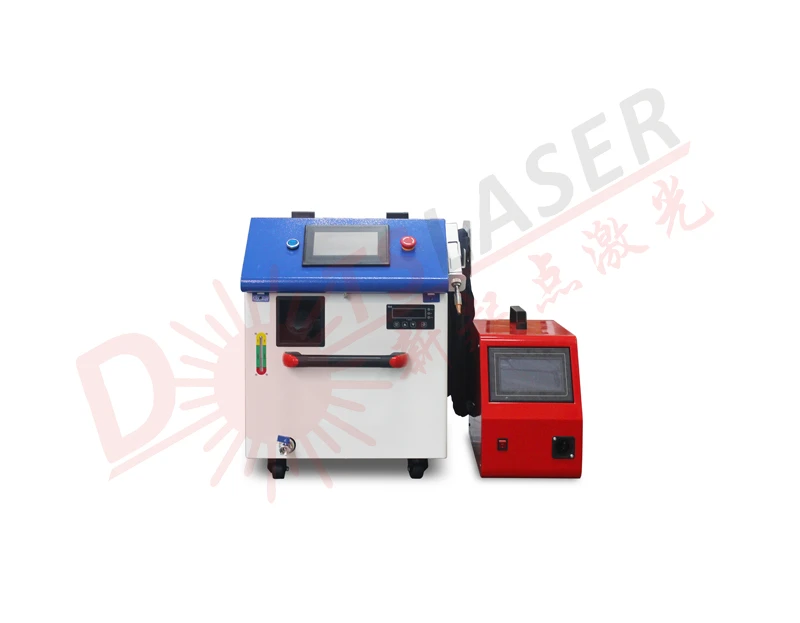
Due to the inherent physical properties of aluminum alloys, such as low laser absorption, low boiling point of alloying elements, high thermal conductivity, high thermal expansion coefficient, relatively wide solidification temperature range, high solidification shrinkage, low viscosity and High hydrogen absorption in liquid state, etc., so defects such as pores and hot cracks are easily generated during the laser welding process. Among them, porosity is the most likely form of defect in the process of aluminum alloy laser welding. It will destroy the compactness of the weld metal, weaken the effective cross-sectional area of the weld, and reduce the mechanical properties and corrosion resistance of the weld. Therefore, effective measures must be taken. Measures to prevent the generation of pores and improve the internal quality of the weld.
Laser fusion welding porosity suppression method 01 Suppresses welding porosity through pre-welding surface treatment. Pre-welding surface treatment is an effective method to control metallurgical porosity in aluminum alloy laser welds. Usually, the surface treatment methods include physical and mechanical cleaning and chemical cleaning. After comparison, the process of chemically treating the surface of the test plate (metal cleaning agent cleaning - water washing - alkali cleaning - water washing - acid washing - water washing - drying) is the best. Among them, 25NaH (sodium hydroxide) solution is used for alkaline cleaning to remove the surface thickness of the material, and 20% HN03 (nitric acid) + 2% (hydrogen fluoride) aqueous solution is used for pickling to neutralize the residual alkali solution. After the surface treatment of the test plate, the welding is carried out within 24 hours , When the test plate stays for a long time after treatment, wipe it with anhydrous alcohol before welding. 02 Suppressing welding porosity through welding process parameters The formation of weld porosity is not only related to the quality of the surface treatment of the weldment, but also related to the welding process parameters. The influence of welding parameters on the weld porosity is mainly reflected in the penetration of the weld, that is, the back The effect of aspect ratio on stomata. It can be seen from the test that when the back-to-width ratio of the weld is R>0.6, the concentrated distribution of chain pores in the weld can be effectively improved. The residue of pores in the weld is eliminated.
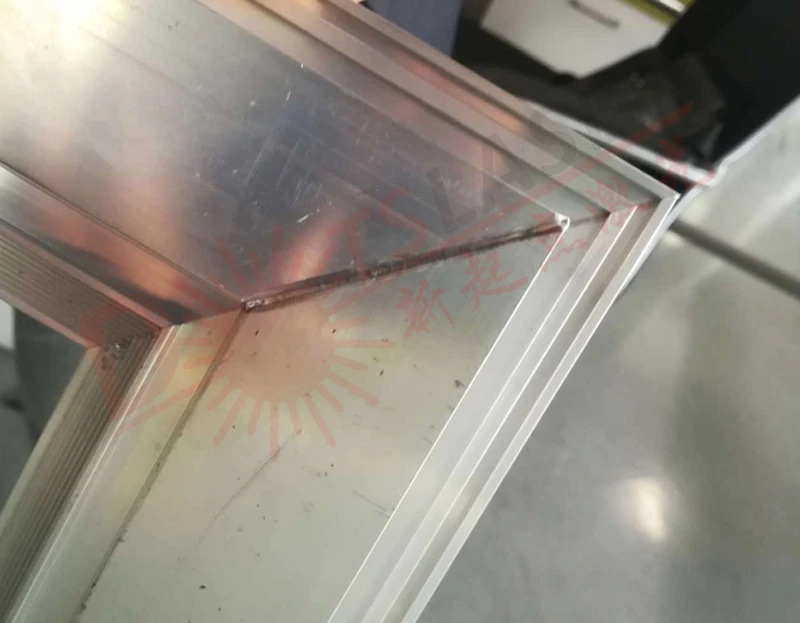
03 Through the correct selection of shielding gas and flow rate to suppress welding pores The selection of shielding gas directly affects the quality, efficiency and cost of welding. During the laser welding process, the correct injection of shielding gas can effectively reduce weld pores. Ar (argon) and He (helium) are used to protect the surface of the weld. In the process of aluminum alloy laser welding, the ionization degree of Ar and He to the laser is different, resulting in different weld formation. The result shows that the choice of Ar The overall porosity of the weld obtained as the shielding gas is less than that of the weld when He is selected as the shielding gas. At the same time, we should also pay attention to the fact that a large amount of plasma generated by welding cannot be blown away if the gas flow rate is too small (10L/min), which makes the welding pool unstable and increases the probability of porosity formation. The gas flow rate is moderate (about 15L/min) and the plasma can be obtained. Effective control, the protective gas has a good anti-oxidation effect on the molten pool, and the porosity is minimal. Excessive air flow is accompanied by excessive gas pressure, so that part of the protective gas is mixed into the molten pool, and the porosity increases.
The suppression of porosity defects in laser welding of aluminum alloys has always been a problem in the industry. Affected by the performance of the aluminum alloy material itself, the phenomenon of no porosity in welding cannot be completely avoided during the welding process, but the porosity can only be reduced. Through the process optimization before and after welding, we have summarized and proposed three ways to suppress porosity through experiments for reference by colleagues in the industry. DOTSLASER laser not only focuses on the research and innovation of laser product technology, but also develops and explores various laser processing technologies, and looks forward to discussing with more industry experts to promote the improvement of laser processing technology in my country.


