
The laser welding machine is a very common welding equipment. It mainly uses high-energy laser pulses to locally heat the material. The energy of the laser radiation diffuses into the material through heat conduction, and the material is melted to form a characteristic molten pool to achieve the purpose of welding.
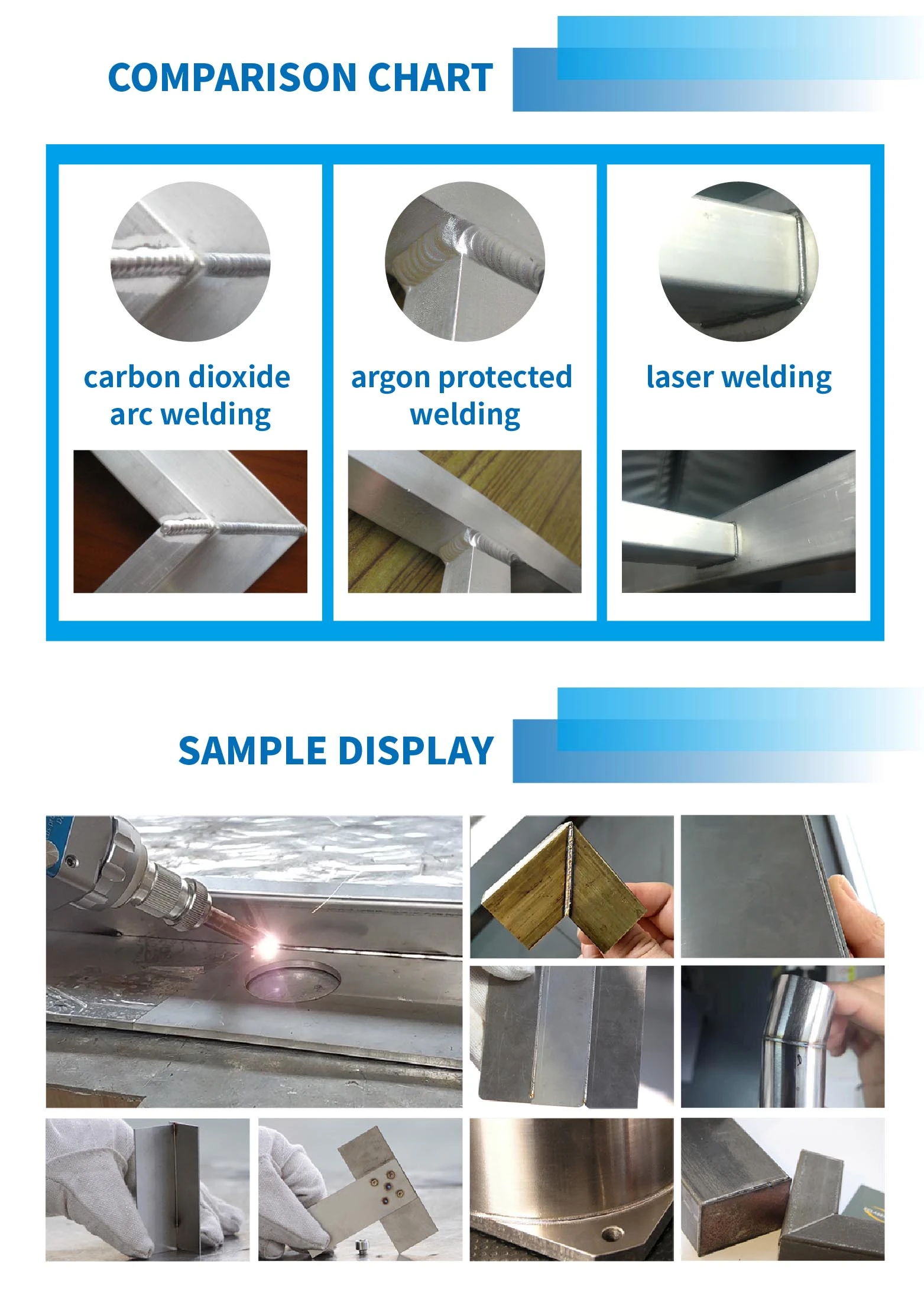
Laser welding machine has become an emerging industrial technology in industrial welding processing with its advantages of fast welding speed, high precision, high efficiency, and smooth and beautiful welds. Laser welding machines are widely used, but many people don't know what materials can be welded by laser welding machines. Below, DOTSLASER will introduce them in detail.
Materials that can be welded by laser welding machine
1. Die steel
The laser welding machine is suitable for the welding of mold steels of S136, SKD-11, NAK80, 8407, 718, 738, H13, P20, W302, 2344, etc., and the welding effect is good.
2. Carbon steel
Carbon steel is welded with a laser welding machine, and the effect is good, and the quality of its welding depends on the content of impurities. In order to obtain good welding quality, preheating is required when the carbon content exceeds 0.25%. When steels with different carbon content are welded to each other, the welding torch can be slightly biased to the side of the low carbon material to ensure the quality of the joint. Because the heating rate and cooling rate during laser welding are very fast, so when welding carbon steel. As the carbon content increases, the susceptibility to weld cracks and notches will increase. Both medium and high carbon steel and ordinary alloy steel can be well laser welded, but preheating and post-welding treatment are required to eliminate stress and avoid cracks.
3. alloy steel
For laser welding of low alloy high strength steel, as long as the selected welding parameters are appropriate, a joint with mechanical properties equivalent to the base metal can be obtained.
4. Stainless steel
In general, stainless steel welding is easier to obtain high-quality joints than conventional welding. Due to the high welding speed and small heat affected zone of laser welding, the overheating phenomenon and the large linear expansion coefficient of stainless steel welding are reduced, and the welding seam has no defects such as pores and inclusions. Compared with carbon steel, stainless steel is easier to obtain deep penetration narrow welds due to its low thermal conductivity, high energy absorption rate and melting efficiency. Welding thin plates with low-power laser welding can obtain joints with well-formed appearance and smooth and beautiful welds.
5. Copper and copper alloys
Welding copper and copper alloys is prone to problems of infusion and incomplete penetration. Therefore, a concentrated energy and high power heat source should be used with preheating measures; when the thickness of the workpiece is thin or the structural rigidity is small, and there is no measure to prevent deformation, welding Later, it is easy to produce large deformation, and when the welded joint is subject to greater rigidity, welding stress is prone to occur; thermal cracks are also prone to occur when welding copper and copper alloys; pores are a common defect in copper and copper alloy welding.
6. Aluminum and aluminum alloy
Aluminum and aluminum alloys are highly reflective materials. When welding aluminum and its alloys, as the temperature increases, the solubility of hydrogen in aluminum increases sharply. The dissolved hydrogen becomes a source of defects in the weld, and there are many pores in the weld. , And there may be a cavity in the root during deep penetration welding, and the weld bead formation is poor.
7. Plastic
Almost all thermoplastics and thermoplastic elastomers can use laser welding technology. Commonly used welding materials are PP, PS, PC, ABS, polyamide, PMMA, POM, PET and PBT. Some other engineering plastics, such as polyphenylene sulfide PPS and liquid crystal polymer, etc., cannot directly use laser welding technology due to their low laser transmittance. Generally, carbon black is added to the underlying material so that the material can absorb enough energy , So as to meet the requirements of laser transmission welding for welding.
The laser welding machine can weld far more than these materials. Laser welding can be carried out between a variety of dissimilar metals. Studies have shown that it is applied to copper-nickel, nickel-titanium, copper titanium, titanium molybdenum, brass copper, Carbon steel copper and other dissimilar metals can be laser welded under certain conditions.


