
What is a fiber laser?
Optical fiber is short for optical fiber and is usually a cylindrical waveguide for light waves. It uses the principle of total reflection to confine light waves to the core and guide them in the direction of the fiber axis. Replacing copper wire with quartz glass changed the world.
As a medium for conducting light waves, optical fiber has been widely used since 1966 when it was introduced by Charles Kao, thanks to its high communication capacity, high interference immunity, low transmission loss, long relay distance, good confidentiality, adaptability, small size, light weight and abundant sources of raw materials. Known as the "father of fiber optics", Kao was awarded the Nobel Prize in Physics in 2009 for his work. With the increasing perfection and practicality of fiber optics, it has revolutionised the telecommunications industry and has largely replaced copper wire as the core component of modern communications.
Optical fiber communication system is a communication system that uses light as the information carrier and optical fiber as the wave guide medium. When optical fiber transmits information, the electrical signal is transformed into an optical signal, which is then transmitted inside the fiber. As an emerging communication technology, fiber optic communication has shown unparalleled superiority from the very beginning and has attracted great interest and widespread attention. The widespread use of optical fibers in communications has also contributed to the rapid development of fiber-optic amplifiers and fiber lasers at the same time . In addition to communications, fiber optic systems are also used in a wide range of applications in medicine, sensing and other fields.
Optical fibers
The gain medium of a fiber laser is the active fiber. According to its structure can be divided into single-mode fiber, double-clad fiber and photonic crystal fiber three.
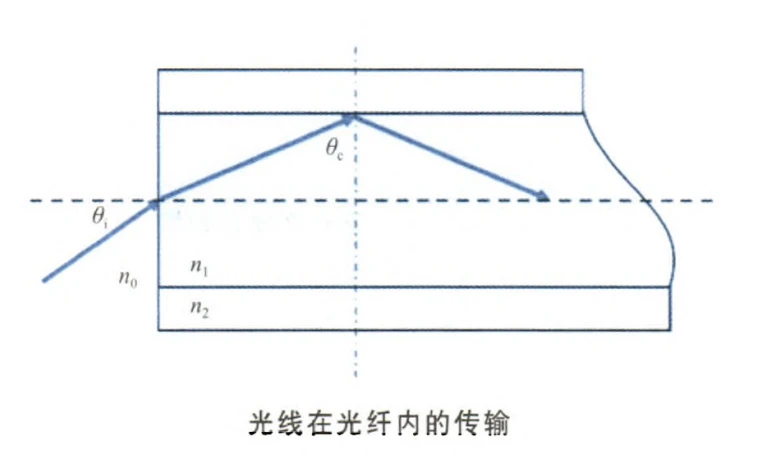
Single-mode optical fiber single-mode fiber consists of a core, cladding and coating layer, where the refractive index of the core material n1, higher than the cladding material refractive index n2, when the incident angle of the incident light is greater than the critical angle picture, the light beam in the core of the full emission, so the fiber can be bound to the light beam in the core propagation. The inner cladding of single-mode fibers cannot play a restraining role for multimode pump light, and the numerical aperture of the core is low, so only single-mode pump light coupling into the core can be used to obtain laser output. Early fiber lasers used this single-mode fiber, resulting in low coupling efficiency and lasers with output power in the milliwatt range.
Double-clad fibers
In order to overcome the limitations of conventional single-mode, single-clad ytterbium-doped (Yb3+) fibers on conversion efficiency and output power, Maurer (R. Maurer) first proposed the concept of double-clad fibers in 1974 . Since then, it was not until 1988, when E. Snitzer and others proposed cladding pumping technology [3], that high power Yb-doped fiber lasers/amplifiers were developed rapidly.
A double-clad fiber is an optical fiber with a special structure that adds an inner cladding layer to the conventional fiber, consisting of a coating layer, an inner cladding layer, an outer cladding layer, and a doped fiber core. The cladding pumping technology is based on a double-clad fiber, the core of which is to allow multimode pump light to be transmitted in the inner cladding and laser light to be transmitted in the core, allowing the pumping conversion efficiency and the output power of the fiber laser to be greatly improved. The structure of the double-clad fiber, the shape of the inner cladding, and the pump light coupling method are the keys to this technology.
The core of the double-clad fiber is composed of silicon dioxide (SiO2) doped with rare-earth elements, which is both the laser medium and the transmission channel of the laser signal in the fiber laser, corresponding to the working wavelength. The transverse size (tens of times the diameter of a conventional core) and numerical aperture of the inner cladding are much larger than that of the core, and the refractive index is smaller than that of the core, which limits the propagation of laser light entirely within the core. This creates a large cross-sectional, large numerical aperture optical waveguide between the core and the outer cladding, which allows large numerical aperture, large cross-sectional and multi-mode high power pumped light to be coupled into the fiber and confined to transmission within the inner cladding without diffusion, facilitating the maintenance of high power density optical pumping. The outer cladding is composed of a polymer material with a smaller refractive index than the inner cladding; the outermost layer is a protective layer composed of organic material. The coupling area of the double-clad fiber to the pumped light is determined by the size of the inner cladding, unlike conventional single-mode fibers, which are determined by the core alone. On the one hand, this improves the power coupling efficiency of the human fiber laser, allowing the pump light to pass through the inner cladding several times to excite doped ions for laser emission; on the other hand, the output beam quality is determined by the nature of the fiber core, and the introduction of the inner cladding does not destroy the beam quality of the fiber laser output.
Initially, the inner cladding of double-clad fibers was cylindrically symmetrical and relatively simple to fabricate and easy to couple to the pigtail of the pump laser diode (LD), but its perfect symmetry resulted in a large number of spiral rays of pump light in the inner cladding that never reached the core region even after enough reflections to be absorbed by the core, so that even with a Even with longer fibers there is still a large amount of light leakage, making it difficult to improve conversion efficiency. For this reason, the cylindrical symmetry of the inner cladding must be broken.
Photonic crystal fibers
In normal double-clad fibers, the geometry of the core determines the output laser power. The numerical aperture determines the beam quality of the output laser. Due to the limitations of non-linear effects, optical damage and other physical mechanisms in optical fibers, a single means of increasing the core diameter cannot meet the demand for single mode operation at high power output in large mode field double cladding fibers. The emergence of special fibers, such as photonic crystal fibers (PCF), provides an effective technical solution to this challenge.
The concept of photonic crystals was first introduced by E. Yablonovitch in 19871 as a periodic structure with different dielectric constants in one, two or three dimensions that allows light to propagate in the photonic conduction band and prohibits light to propagate in the photonic band gap (PBG). PCFs are two-dimensional photonic crystals, also known as microstructured fibers or porous fibers, and in 1996 J. C. Knight et al. produced the first PCFs with a light-guiding mechanism similar to that of conventional fibers with total internal reflection. After 2005, the design and preparation of large mode field PCFs began to diversify, with the emergence of various shapes, including leaky channel PCFs, rod-shaped PCFs, large pitch PCFs and multi-core PCFs. The mode-field area of the fiber has also continued to increase accordingly.
In appearance, PCFs are very similar to conventional single-mode fibers, but microscopically they exhibit complex hole-array structures. It is these structural features that give PCFs unique and unmatched advantages over conventional fibers, such as cut-off-free single-mode transmission, large mode field area, tunable dispersion and low limiting loss, which can overcome many of the challenges of conventional lasers. For example, PCF can achieve single-mode operation in a large mode field area, while ensuring beam quality, significantly reducing the laser power density in the fiber, reducing non-linear effects in the fiber and increasing the damage threshold of the fiber; it can achieve a large numerical aperture, which means more pump optical coupling and higher power laser output can be achieved. This has made it a new research highlight in fiber lasers, playing an increasingly important role in the application of high power fiber lasers.
The invention of the fiber laser
Lasers that use optical fibers as the laser gain medium are known as fiber lasers. Like other types of lasers, it consists of three parts: the gain medium, the pump source and the resonant cavity. fiber lasers use an active fiber with a core doped with rare earth elements as the gain medium. A semiconductor laser is generally used as the pump source. The resonant cavity is generally composed of reflective mirrors, fiber end surfaces, fiber ring mirrors or fiber gratings.
According to the time domain characteristics of the fiber laser, it can be divided into continuous fiber laser and pulsed fiber laser; according to the resonant cavity structure, it can be divided into linear cavity fiber laser, distributed feedback fiber laser and ring cavity fiber laser; according to the gain fiber and the different pumping methods, it can be divided into single cladding fiber laser (fiber core pumping) and double cladding fiber laser (cladding pumping).
In 1961, Snitzer discovered laser radiation in neodymium (Nd)-doped glass waveguides. 1966, Kao studied in detail the main causes of light attenuation in optical fibers and pointed out the main technical problems that need to be solved for the practical application of optical fibers in communications . 1970, Corning in the USA developed optical fibers with attenuation less than 20 dB/km, which laid the foundation for the development of the optical communications and optoelectronics industry . This laid the foundation for the development of the optical communications and optoelectronics industries . In the 1970s and 1980s, the maturation and commercialisation of semiconductor laser technology provided a reliable and diverse pump source for the development of fiber lasers. At the same time, the development of chemical vapour deposition method makes the transmission loss of fiber optic continuously reduced. Fiber lasers are also rapidly developing in the direction of diversification, with fibers doped with a variety of rare earth elements, such as erbium (Er3+), ytterbium (Yb3+), neodymium (Nd3+), samarium (Sm 3+), thulium (Tm3+), holmium (Ho3+), praseodymium (Pr3+), dysprosium (Dy3+), bismuth (Bi3+) and so on. Depending on the ions doped, different wavelengths of laser output can be achieved. To meet the requirements of different applications.
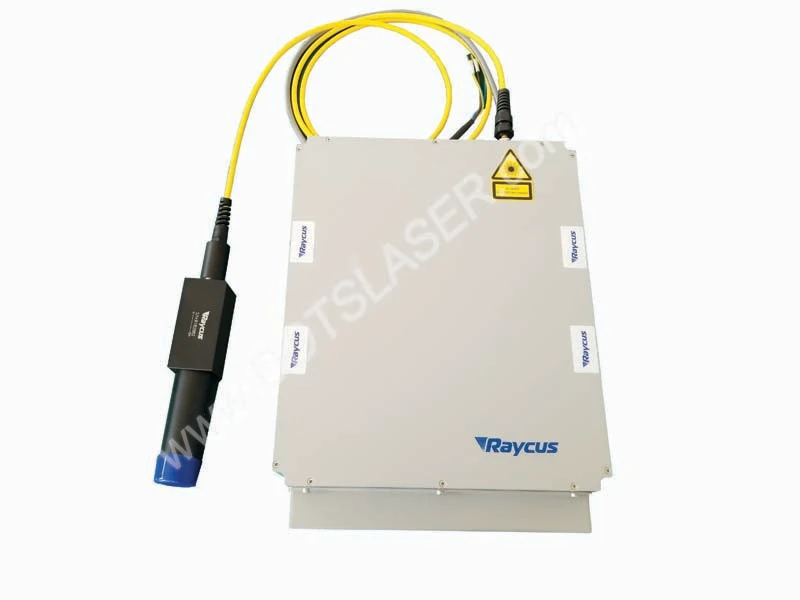
Features of high power fiber lasers
The advantages of high power fiber lasers are as follows.
(1) Good beam quality. The waveguide structure of the optical fiber makes it easy to obtain a single transverse mode output, and the influence of external factors is very small, to achieve a high brightness laser output.
(2) High efficiency. Fiber laser by choosing the emission wavelength and doped rare earth elements absorption characteristics of the semiconductor laser for the pump source, you can achieve a very high light a light conversion efficiency. For ytterbium doped high power fiber lasers, generally choose 915nm or 975nm semiconductor lasers, due to the simple energy level structure of Yb3+, upconversion, excited state absorption and concentration bursts are less likely to occur, fluorescence life is longer and can effectively store energy for high power operation. The overall electro-optical efficiency of commercial fiber lasers is as high as 25%, which is conducive to cost reduction, energy saving and environmental protection.
(3) Good heat dissipation characteristics. Fiber lasers are used as a laser gain medium using a thin, rare earth element doped fiber with a very large surface area to volume ratio. About 1000 times the solid block laser, in terms of heat dissipation capacity has a natural advantage. No special cooling of the fiber is required for low and medium power cases, and water cooling is used for high power cases, which also effectively avoids the degradation of beam quality and efficiency due to thermal effects commonly found in solid-state lasers.
(4) Compact structure, high reliability. As the fiber laser uses a small and flexible fiber as the laser gain medium, it helps to compress the volume and save costs. Pump source is also used in small size, easy to modular semiconductor lasers, commercial products are generally available with pigtail output, combined with fiber Bragg grating and other fiber optic devices, as long as these devices are fused to each other to achieve full fiber, immunity to environmental disturbances, with high stability, can save maintenance time and costs.
High power fiber lasers also have disadvantages that are difficult to overcome: one is the vulnerability to non-linear effects. Fiber lasers have a long effective length and a low threshold for various non-linear effects due to the geometry of their waveguides. Some harmful nonlinear effects such as excited Raman scattering (SRS), self-phase modulation (SPM), etc. can cause phase fluctuations and energy transfer on the spectrum, or even damage to the laser system, limiting the development of high-power fiber lasers. The second is the photon darkening effect. With the increase in pumping time, photon darkening effect can lead to high doping concentration of rare earth element-doped fiber power conversion efficiency monotonically irreversible decline, limiting the long-term stability and service life of high-power fiber lasers, which is particularly obvious in ytterbium-doped high-power fiber lasers.
With the advancement of high brightness fiber-coupled semiconductor lasers and double-clad fiber technology, the output power, optical-to-optical conversion efficiency and beam quality of high-power fiber lasers have developed significantly. In the industrial processing, directed energy weapons, long-range telemetry, LIDAR and other applications of huge demand traction, to the United States Apache Photonics (IPG Photonics), Nufern (Nufern), Nlight (Nlight) and Germany Tong Express Group, mainly research units on continuous wave, pulse wave high-power fiber laser research and development, launched a rich product lines. Exciting results have also been reported by a number of units in China, including Tsinghua University, the National University of Defense Technology, the Shanghai Institute of Optics and Precision Machinery of the Chinese Academy of Sciences and the Fourth Research Institute of the China Aerospace Science and Industry Corporation.
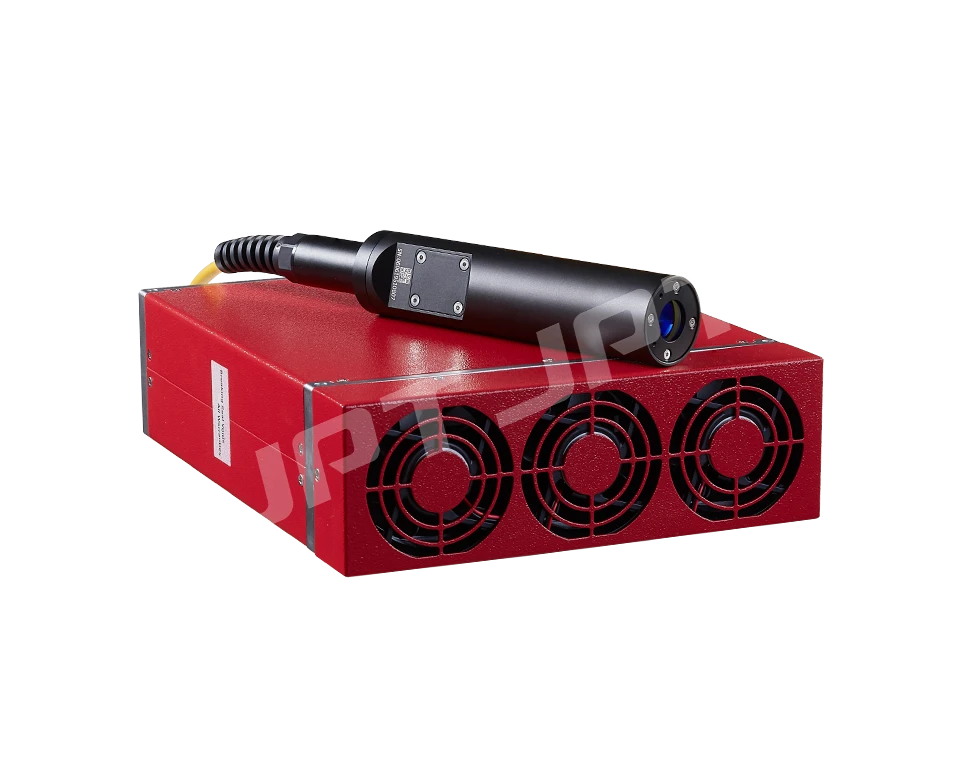
Fiber laser power enhancement technology
Due to the non-linear effects in the fiber laser, thermal effects and material damage threshold limitations, the output power of a single fiber laser is limited to a certain extent, and as the power increases, the beam quality gradually decreases, requiring the use of mode control technology and the design of a special structure of the new fiber to improve the beam quality. Dawson (J. W. Dawson) et al theoretically analyzed the output power limit of a single fiber and calculated that in broadband fiber lasers a single fiber can obtain a maximum power of 36 kW near diffraction limit laser output, while for narrow linewidth fiber lasers, the maximum power is 2 kW. In order to further enhance the output power of the fiber laser and amplifier, power synthesis of multiple fiber lasers by coherent synthesis technology is an effective method. It has become an international research hotspot in recent years.
Coherent synthesis is achieved by controlling the phase, frequency and polarisation of each laser beam with a certain consistency, so that it meets the coherence condition and obtains a homogeneous phase-locked output, which can obtain a much higher peak intensity than simple non-coherent superposition and maintain good beam quality. The history of the development of coherent synthesis technology is almost as long as the history of lasers themselves, and involves various types of gas lasers, chemical lasers, semiconductor lasers, solid-state lasers, etc. However, due to the immaturity of various devices in the early days, the experimental results achieved by coherent synthesis technology did not break through the maximum output power of the corresponding single-link laser at that time, so the effect was not very obvious. From the 1990s onwards, the advent of fiber lasers led to a rapid development of coherent synthesis techniques. In addition to the unique advantages of fiber lasers and the need for tactical use of hundreds of kilowatts, several devices (i.e. fiber cone couplers, multi-core fibers, phase modulators with pigtails and acousto-optical frequency shifters, etc.) have played a crucial role in the commercial roll-out of fiber optic communications. Fiber cone couplers and multicore fibers facilitate passive phase control based on laser energy injection coupling and swift wave coupling, while phase modulators with pigtails and acousto-optical frequency shifters enable active phase control with megahertz control bandwidths, which can be used to control phase fluctuations at high power conditions and achieve phase-locked outputs. Researchers have proposed a number of distinctive coherent synthesis schemes.
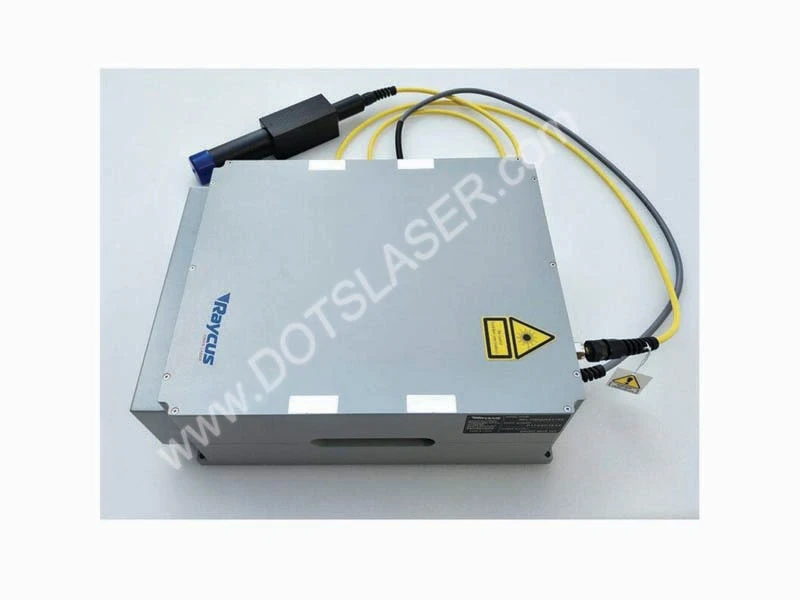
Spectral synthesis is a non-coherent synthesis technique that uses one or more diffraction gratings to diffract multiple subbeams into the same aperture, resulting in a single aperture output with good beam quality. Spectral synthesis of fiber lasers can make full use of the wide gain bandwidth of Yb-doped fiber lasers to compensate for the limited output power of a single fiber laser.


