


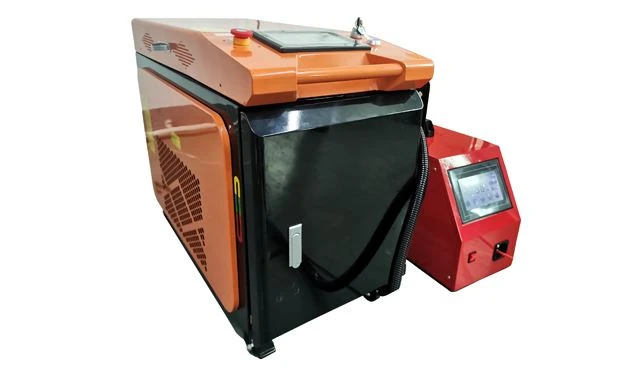
Laser Welding Machine Welding Carbon Steel
Laser Welding Machine Welding Carbon Steel
Products Description
Laser welding is a non-contact and highly precise welding technique that has been widely used in industrial applications. In recent years, the application of laser welding has expanded to include the welding of carbon steel, a commonly used material in the manufacturing industry. Carbon steel is a cost-effective material that is widely used in various industries, including automotive, construction, and offshore. This article explores the use of laser welding for carbon steel and discusses its advantages and disadvantages.
Products advantages
1. High Precision
Laser welding is a highly precise welding technique that allows for accurate welding of carbon steel. The controlled and precise heat input provided by laser welding results in a small heat-affected zone and minimal distortion. This makes laser welding ideal for welding thin and small carbon steel structures.
2. High Welding Speed
Laser welding has a high welding speed compared to other welding techniques. The high weld speed is achieved due to the high power density of the laser beam. This results in higher productivity and reduced production time.
3. Reduced Heat Input
Laser welding has a low heat input, which prevents the carbon steel from overheating and reduces the risk of distortion. In addition, the low heat input also reduces the weld's tendency to become brittle and prevents cracking.
4. Low Defect Rates
Laser welding has a low defect rate due to its high precision and reduced heat input. This results in high-quality welds with high strength and toughness.
Parameters
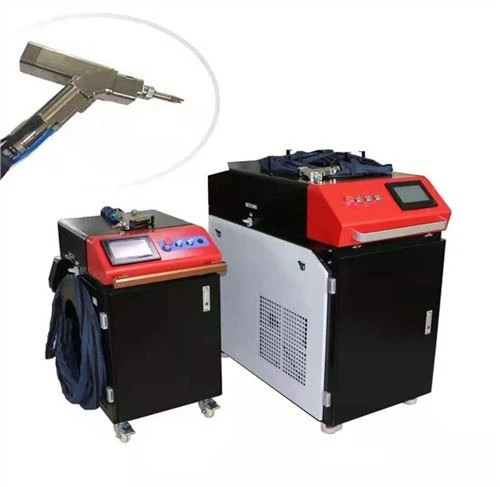
| Model series | DS-LW series (RAYCUS laser source) | ||
| Model | DS-LW1000 | DS-LW1500 | DS-LW2000 |
| Laser source model | RAL-QCW 1000 | RAL-QCW 1500 | RAL-QCW 2000 |
| Output power | 1000W | 1500W | 2000W |
| Laser wavelength | 1080±5 nm | ||
| Operating mode | Continuous /Modulation | ||
| Power adjustment range | 10-100% | ||
| Fiber core diameter | 50 (25,100,200 optional) | ||
| Aiming and positioning | Red light | ||
| Fiber length | 10m | ||
| Welding speed | 0-120mm/s | ||
| Applicable thicikness | <3.5mm (depending on the material) | ||
| Wire feeder | Standard wire feeding speed 38-600mm/min | ||
| Wire feed diameter | 0.8/1.0/1.2/1.6/2.0mm | ||
| Cooling way | Water cooling | ||
| Working environment | 10-40°C,humidity 10-85%,no condensation | ||
| Rated power | 4KW | 6KW | 8KW |
| Operating Voltage | 380±10%VAC,50,60HZ | ||
| Dimensions | 1150X630X1080 mm | ||
| Total weight | About 250kg | ||
Welding details

Laser Welding Process
Laser welding is a process that uses a high-intensity laser beam to melt metal. The laser beam heats the metal up to its melting point, which fuses the two pieces of metal together. During the laser welding process, the beam spot size and power density are important parameters that determine the weld penetration depth and width. The laser beam can be produced by several types of lasers, including CO2, Nd: YAG and fiber.
Types of Carbon Steel
Carbon steel is a steel alloy that contains varying amounts of carbon, depending on the grade. The carbon content in carbon steel is between 0.12% to 2.0%. Low carbon steel has a carbon content of less than 0.30%, while high carbon steel has a carbon content of more than 0.60%.
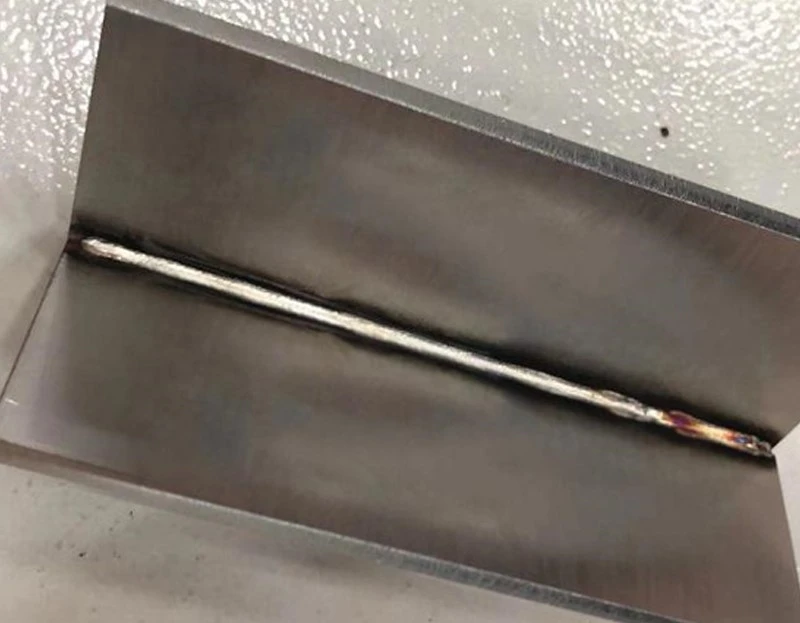

applications
1. Automotive Industry
Laser welding is widely used in the automotive industry to weld various components, including chassis components, powertrain components, and exhaust systems.
2. Aerospace Industry
Laser welding is used in the aerospace industry to weld carbon steel components such as engine parts, landing gears, and structural components.
3. Construction Industry
Laser welding is used in the construction industry to weld carbon steel structures, including pipelines, bridges, and buildings.
Laser welding is an advanced welding technique that has many advantages in welding carbon steel.
Its high precision, high welding speed, reduced heat input, and low defect rates make it an ideal choice for welding thin and small carbon steel structures. However, its high equipment cost, limited thickness range, and complex operating procedure can make it challenging for small businesses or manufacturers to invest in this technology.
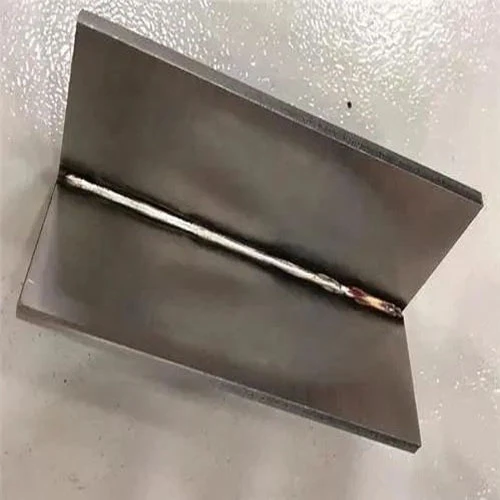
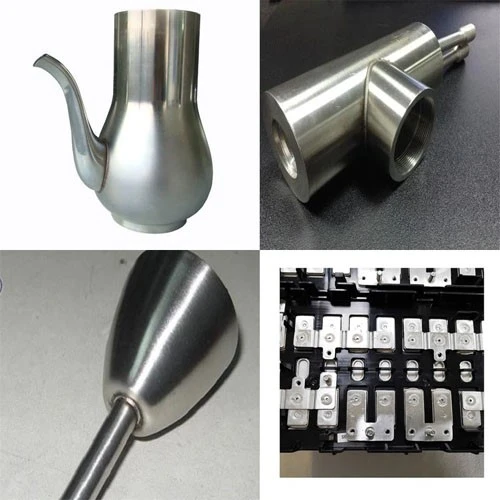
Samples
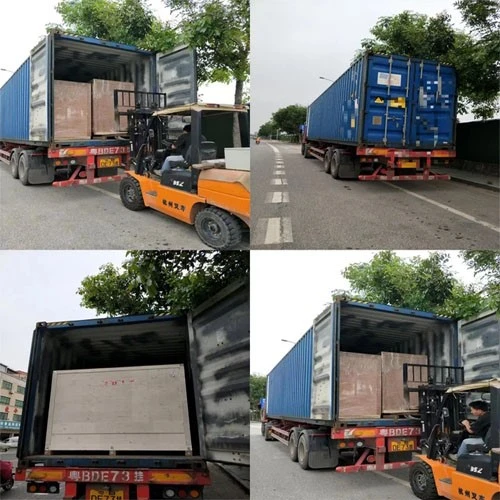
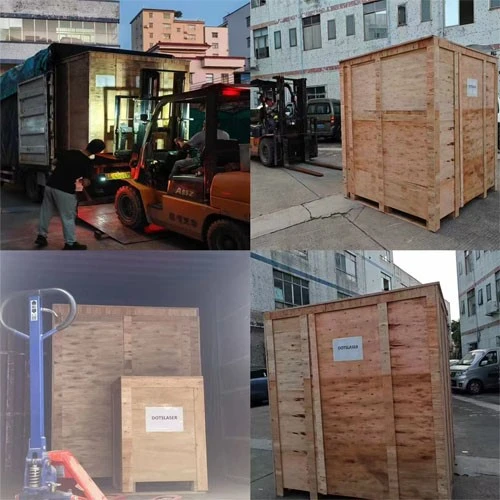
Shipping and Package
1. Quality assurance and after-sales service
The warranty period of the equipment shall be 12 months since the equipment be used by the customers, the installation and debugging is completed and the equipment is accepted by the demander. Dotslaser attaches great importance to the after-sales service work of the product, once the product is delivered to the user, the company immediately established the user after-sales service file, and regularly track the user's product use status, solve and answer all the problems of the user, received the user's notification information about the equipment failure, the company's workers can make a rapid response within 2 hours. If the telephone guidance is difficult to troubleshoot, our company's technical staff can arrive at the customer site within 24 hours to provide support.
2. Installation and debugging
Before machine installation, our factory will offer you a basic structure installation file,the good need 2 weeks delivery to you there , the engineers of Dotslaser will arrive at your site and inspect the machine again. Comfirm all the conditions meet the installation and commissioning requirements of the equipment, the equipment will transport in time. The installation and commissioning time of the equipment is about five working days, the first three days are connected to the use of the system, and the system is operational after the service project. The engineer will train qualified operators on basic maintenance procedures and general operating characteristics of the equipment in the next two days
3. Service support
If there has any problem with any part of the system during the warranty period, Dotslaser well-trained service engineers are ready to provide cellphone call or begin on-site service,if the machine has any problem during the warranty period,please contact us directly !
You Might Also Like


Send Inquiry