
UV laser refers to the light that the output beam is in the ultraviolet spectrum and is invisible to the naked eye. At present, the common industrial UV lasers include solid crystal UV lasers and gas UV lasers. Three times the frequency of the infrared all-solid-state laser can get the laser output, and the wavelength is mostly 355nm. At present, the pulse width has successfully developed from nanosecond to picosecond level. Excimer lasers are common gas UV lasers, which are mainly used for ophthalmic surgery and chip lithography. In recent years, fiber lasers have gradually developed products in the ultraviolet band, and picosecond ultraviolet fiber lasers are the most representative.
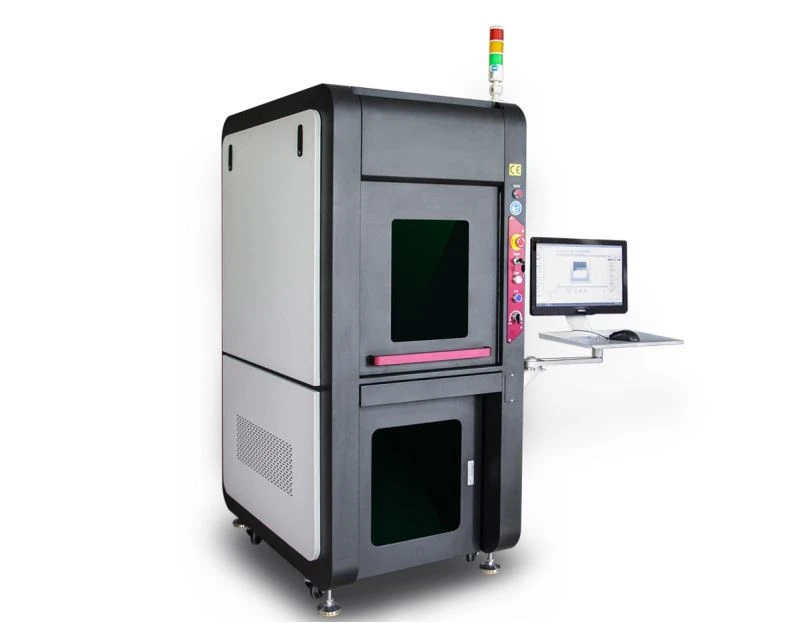
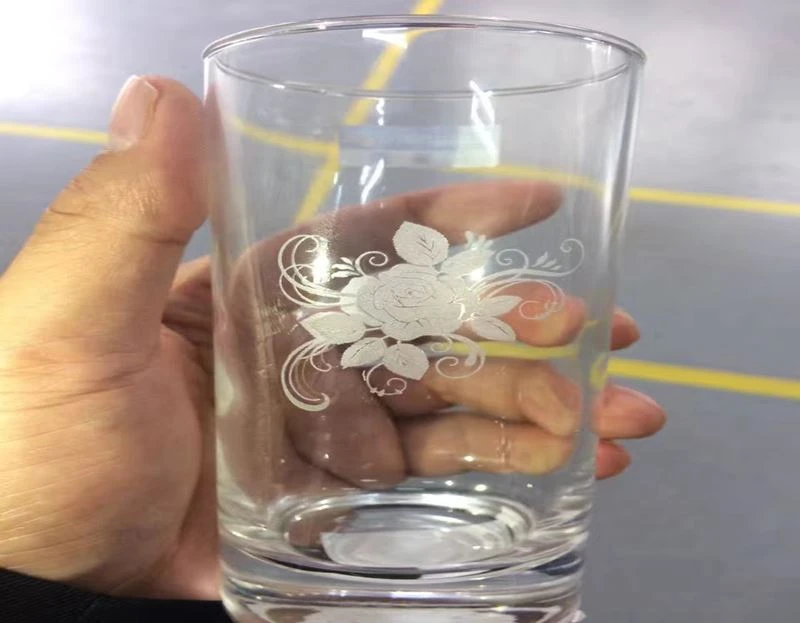
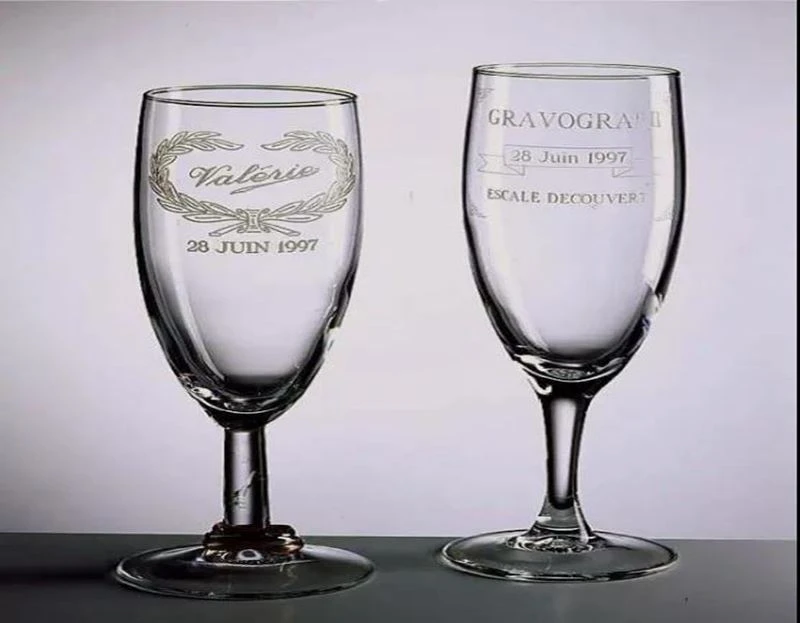
Glass is a material widely used in daily life. From drinking glasses, wine glasses, containers to glass ornaments, pattern making on glass is often a difficult problem. Traditional processing often results in a high rate of glass damage. UV lasers are very suitable for glass surfaces. It can be used for marking, patterning, and ultra-fine production. UV laser marking makes up for various deficiencies in the past, such as poor processing accuracy, difficult drawing, damage to the workpiece, and environmental pollution. With its unique processing advantages, it has become the new favorite of glass product processing, and it has been listed as a must-have by various drinking glasses, craft gifts and other industries. Processing tools.
Ceramic materials are widely used in construction, utensils, decorations, etc., but in fact, ceramics also have many applications in electronic product devices. For example, mobile phone merchants have introduced ceramic back covers before, which are widely used in mobile communications, optical communications, and electronic products. Ceramic ferrules, ceramic substrates, ceramic package bases, ceramic cover plates for fingerprint identification systems, etc. The more sophisticated the production of these ceramic components, the use of UV laser cutting is currently an ideal choice.UV laser has very high processing precision for some ceramic thin slices, will not cause ceramic fragmentation, and does not require secondary grinding for one-time forming, and will be more used in the future.
UV laser wafer cutting: The surface of the sapphire substrate is hard, and it is difficult for the general cutter wheel to cut it, and the wear is large, the yield is low, and the cutting path is larger than 30 μm, which not only reduces the use area, but also reduces the output of the product. Driven by the blue and white LED industry, the demand for sapphire substrate wafer cutting has increased greatly, and higher requirements have been put forward for improving productivity and finished product qualification rate. Ultraviolet laser cutting wafers can achieve high-precision cutting, smooth cuts, and greatly improved yields.
Quartz cutting has always been a difficult problem in the industry. The most commonly used traditional processing method is the "diamond saw blade", which is processed by the "hard-to-hard" method. Quartz is very brittle and difficult to process. Diamond saw blades are consumables.
The UV laser has an ultra-high precision of ±0.02mm, which can fully guarantee the precise cutting requirements. In the face of quartz cutting, precise control of the power can make the cut surface very smooth, and the speed is much faster than manual processing. The parameters can be displayed in full digital, and different parameters can be adjusted accurately through the computer. The accuracy is more intuitive, and the difficulty of getting started is much lower than that of manual cutting.


