


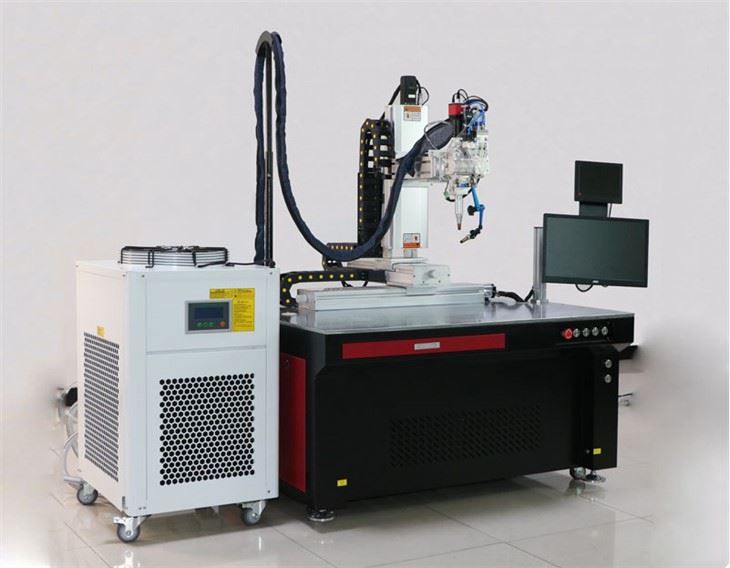
Laser Welding For High Conductivity Copper
Laser Welding For High Conductivity Copper
Products Description
Laser Welding For High Conductivity Copper Busba is a complex process that requires precise control of laser parameters, including laser power, beam diameter, pulse duration, and repetition rate. These parameters affect the energy density of the laser beam, which in turn affects the weld quality and properties. One of the key challenges is to achieve a sufficient energy density to overcome the high thermal conductivity of the copper material while avoiding excessive heat input that can lead to thermal damage and welding defects, such as porosity and cracking.
Machine Advantages
| 1.The X, Y, Z, and D axis of the workpiece to be welded are step-driven to meet the needs of large travel. | |||
| 2.CCD image monitoring ensures the stability of welding quality. | |||
| 3.The laser head is not in contact with the workpiece, and there is no problem of wear of processing tools. | |||
| 4.The workpiece is not stressed and is not easy to be polluted; | |||
| 5.It can process the moving workpiece or the material sealed in the glass shell; | |||
| 6.Multi-axis with auto focus and rotation function,it is smart to weld products of any shape in 3D space. | |||
| 7. CNC automatic control to make sure welding area uniformly. | |||
| 8. Welding seam smooth and beautiful, no need polishing, save your time. |
- Parameters
|
Model |
DS-LW3000 |
DS-LW4000 |
DS-LW6000 |
DS-LW12000 |
|
Laser power output |
3000W |
4000W |
6000W |
12000W |
|
Laser wavelength |
1070±5nm |
|||
|
Laser type |
Fiber |
|||
|
Marking area |
800mmx300mmx300mm |
|||
|
Pulse frequency |
1~100KHZ |
|||
|
Beam quality |
1.1mm |
|||
|
Adjust power range |
5-95% |
|||
|
Output fiber length |
5/10/15m (Optional) |
|||
|
Weight |
500KG |
|||
|
Cooling |
Water cooled |
|||
|
Working temp |
10~35 ℃ |
|||
|
Humidity range |
< 70% No condensation |
|||
|
Power supply |
AC220V±10%,50Hz or AC380V±10%,60Hz |
|||
Laser welding of high conductivity copper is a complex process that requires precise control of laser parameters, including laser power, beam diameter, pulse duration, and repetition rate. These parameters affect the energy density of the laser beam, which in turn affects the weld quality and properties. One of the key challenges is to achieve a sufficient energy density to overcome the high thermal conductivity of the copper material while avoiding excessive heat input that can lead to thermal damage and welding defects, such as porosity and cracking.

How Does Laser Welding Technology Work?
In the laser welding process, a highly concentrated beam of light is focused on the cavity between the materials to be joined. The powerful laser beam melts the materials at their seams and fuses into a joint. With such a highly concentrated heat source being used, laser welding in thin materials can be done at high speeds. In thicker materials, laser welding can produce deep and narrow welds.

what are the different types of Laser Welding techniques?

Ring Mode Laser Welding
Ring Mode Laser Welding is utilizes the power of lasers to create strong and precise welds. This innovative technology is faster, more efficient, and more reliable than traditional welding methods. With Ring Mode Laser Welding, a focused laser beam is used to create a keyhole in the material being welded, which is then filled with molten metal to form a strong, seamless bond. This is a precious technology that can be used on a wide range of materials, including metals and plastics.
Single-mode Laser with Wobble Welding
The Single-mode Laser with Wobble Welding is a cutting-edge technology that facilitates precise and efficient welding. This innovative technique can produce high-quality welds with minimal distortion and minimal heat input. The technology works by using a high-powered laser beam that is focused to a single mode, which allows it to produce a very small spot size.


Green Laser Welding
Green Laser Welding is an innovative technology that has revolutionized the welding industry. It uses a green laser beam to join two or more metal pieces with high precision and accuracy. Compared to traditional welding methods, it is a lot more efficient, faster, and environmentally friendly. One of the significant benefits of green laser welding is its ability to weld thin, delicate, and complex metal components that would otherwise be challenging to weld with conventional methods. Its precision and accuracy guarantee a high-quality, clean-looking welding.
Nanosecond laser welding
Nanosecond laser welding is a cutting-edge technology that enables precise, efficient and high-quality welding processes. This technique uses a pulsing laser beam that lasts for only a few nanoseconds, producing a concentrated heat source that melts the material being welded. The heat-affected zone is minimized, nearly no thermal distortion and weld shrinkage.

Laser protective goggles are special glasses that can prevent or reduce laser damage to human eyes.
When choosing protective goggles, according to the maximum output power (or energy) of the laser used, optical density (the larger the OD: OD value, the stronger the protective ability of the laser protective goggles), visible light transmittance (visible light transmittance: the value is lower than 20%, laser safety glasses need to be used in a well-lit environment) to choose.

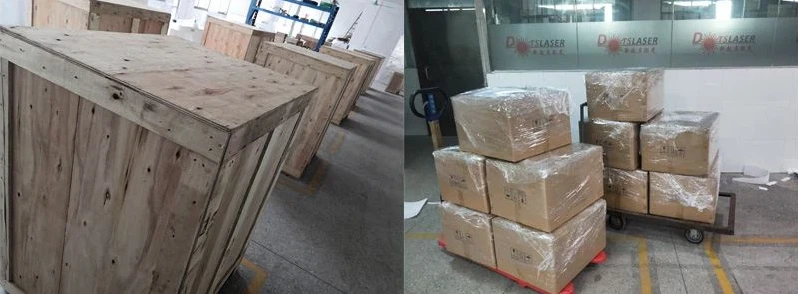
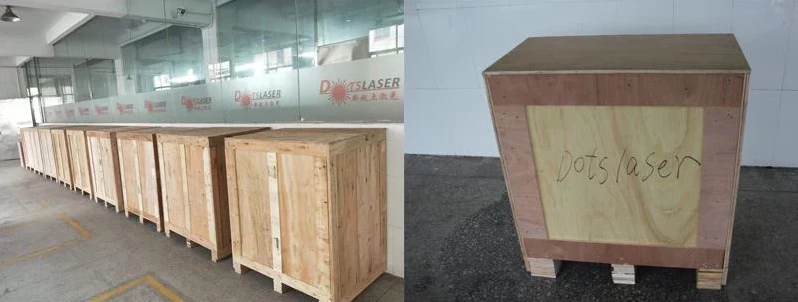
Shipping and package
You Might Also Like


Send Inquiry